What you can find here
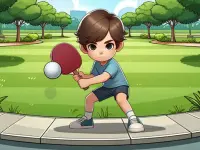
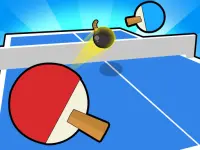
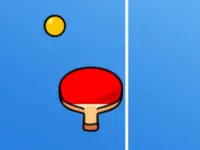
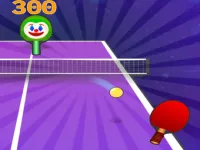
Ping Pong offers direct paddle timing practice. Ping Pong Battle Table Tennis and Ping Pong Table Tennis present opponent-focused play. Endless Ping Pong emphasizes rally duration, while Extreme Ping Pong Dash Challenge adds a reflex-oriented variation. Money Ping Pong and Boy Ping Pong use the familiar name in more stylized settings. Their shared keyword does not guarantee identical physics.
Core rally skills
Track the ball after it leaves the opposite side and move toward the predicted meeting point. Centered paddle contact is usually easier to control. Contact nearer an edge can produce a wider angle, but it is riskier when you are late or off balance. After each return, recover toward a position that keeps both sides reachable.
Practical improvement
Build a neutral rally before chasing winners. When the pace rises, shorten your mouse or finger movement. If the ball repeatedly passes one side, start reading its trajectory earlier. If you reach it but cannot cover the next shot, begin recovery immediately after contact.
The internal Ping Pong timing guide expands on angles, rhythm, compact movement, and common rally errors.
Choosing a mode
Select a match-style game for scoring and positional decisions, or an endless version when you want a pure consistency test. Arcade variants may reward speed or use nonstandard targets. Give each title a short calibration rally because paddle sensitivity and ball speed can differ.
Questions
Should the paddle chase the visible ball? Move to its projected crossing point. Are edge hits always stronger? They can change direction more, but control comes first. What helps on touchscreens? Smooth slides and small corrections rather than repeated taps.
Ball speed and paddle sensitivity
One title may accelerate the ball after every hit, while another keeps a steadier pace or changes speed after points. Paddle movement can also feel different between mouse, keyboard, and touch. Spend the first rally calibrating how far a small input moves the paddle. This prevents overcorrection when the exchange becomes faster.
Sound and animation can support timing, but the visible trajectory is the most dependable cue. Watch the ball leave the opponent, estimate the crossing point, and arrive with enough time for a small adjustment. When an effect or background becomes distracting, narrow attention to the ball and the playable table boundary.
Match goals versus endurance goals
In a scored match, placement and opponent position influence risk. A wide return can earn a point, but losing control gives the opponent an easy opening. In an endless rally game, every risky angle threatens the main objective, so central contact and recovery deserve priority. Challenge variants may add targets or hazards that override both habits.
Use the result screen to choose the next focus. A low rally count suggests timing work. Reaching the ball but losing the following shot suggests recovery work. Consistent neutral exchanges mean you are ready to experiment with placement. This progression applies across the tag even when graphics and scoring differ.
For local practice, choose a comfortable rally goal and raise it only after you meet it repeatedly. In scored play, add one placement goal, such as returning to open space once per rally. Separating consistency practice from attack practice makes improvement easier to notice.
Pause between rounds to identify one repeated miss; a specific correction is more useful than simply restarting faster.