Cutting a support changes what happens next
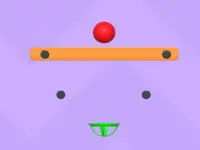
Cut The Rope 2 is a useful starting point for support-based puzzles. This page currently loads Cut the Rope: Time Travel, whose verified opening has two candies suspended above two hungry characters. Cutting a rope releases a sweet, and the resulting path matters as much as the gesture itself. Stars along the route encourage you to think about where the candy travels before it reaches a mouth. Check both destinations instead of assuming that feeding the first character completes the whole arrangement.
For this kind of puzzle, work backwards from the destination. Identify the object that needs to arrive, the support holding it, and the route available after release. When the object is already moving, notice its direction as well as its location. Removing a rope does not cancel a swing. A deliberate first attempt tells you whether your prediction was reasonable, and a replay lets you change one part of that prediction. Observation after the cut is a central part of solving the puzzle.
Slicing a target asks for a different decision
Fruit Ninja Game represents the fruit-slicing side of the collection. Here the useful comparison is the target of the gesture: you are cutting fruit rather than removing a rope that holds another object. Read its opening rules before assuming how it treats missed targets, hazards, or scoring. A technique learned in a rope puzzle does not automatically transfer to a game built around moving items, because the timing and purpose of the input are different.
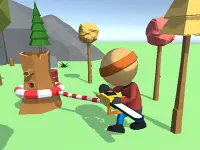
Other visible titles, including Good Slice, Woodcutter 3D, and Cut My Ropes, show the range of themes gathered under this tag. Their names help you choose what to inspect next, but they do not establish identical controls or progression. Open a game and identify whether you are shaping a material, striking a target, or releasing an object. That first distinction prevents unnecessary confusion and helps you choose a task that matches the kind of concentration you want during the session.
Make each gesture intentional
Before a swipe, locate both the intended target and nearby objects that you do not want to affect. A long stroke may be convenient in one game and accidentally sever a second support in another. Start with a controlled gesture and observe the response. If an action did not register, check what the current game asks you to do rather than immediately repeating a larger movement. Mouse dragging, a touch swipe, and a stationary press are different inputs, and individual games decide which of them they use.
Keep one practical goal for a new attempt. In a route puzzle, that might mean reaching the destination reliably before pursuing collectibles. In a target game, it might mean learning which visible objects count as valid targets. After a failure, describe the event that caused it. An early release, an accidental second cut, and a missed moving object suggest different corrections. Useful practice connects a particular result to a particular choice instead of treating every unsuccessful round as a reason to move faster.
Follow a focused example when you need one
The Cut the Rope guide follows the currently loaded Time Travel opening and explains two candy routes, star collection, swinging motion, and purposeful replays. Apply those details to that game, then return to this tag for a different cutting challenge. Features such as level totals, saved progress, extra tools, and device support belong to individual versions. Let the loaded instructions and visible feedback settle those questions while you concentrate on making a cut whose result you can understand.