Representative choices
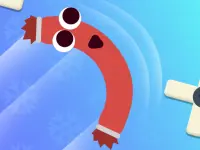
Sausage-Flip-Game is the clearest aiming-and-landing option in the collection. Sausage Flip Free follows the same broad flip theme, while Sausage Survival Master places more weight on avoiding danger. Flip Master expands the flipping idea beyond the sausage character, and Bottle Flip Game uses a familiar physics concept with a different object and landing behavior.
How flip puzzles work
Drag from the character, choose an angle, and release. A stronger pull usually creates a longer launch, but the starting pose also affects rotation. A successful move reaches a surface and settles well enough for another controlled gesture. Landing at the far edge or arriving too quickly can turn a visually impressive jump into a failed position.
Useful player habits
Calibrate with a modest first attempt. If it falls short, increase power; if it flies past the target, reduce power or aim deeper onto the surface. Let all motion stop before the next flip. On sequences of narrow objects, use short deliberate launches and treat each stable landing as a checkpoint.
The internal Sausage Flip guide gives a more detailed method for reading arcs, contact angles, and common misses.
Choosing the right entry
Pick a flip puzzle when you want measured retries and physics feedback. Choose a survival title when reaction and hazard awareness sound more appealing. The shared theme makes browsing easy, but controls and win conditions vary, so do not assume that every sausage game sticks to platforms or uses the same drag length.
Questions
Is maximum power best? Only for a large safe gap. Why do repeated gestures differ? The starting orientation and residual movement changed. What improves consistency? Adjusting one variable per attempt and aiming for broad contact rather than the platform edge.
Surface shape changes the answer
Wide horizontal objects forgive small aiming errors. Slopes can redirect or slide the character, vertical walls may require sticky contact, and moving objects add timing to the power calculation. Aim inside a surface rather than at its very edge. When the target moves, release for the place where it will be at arrival, not where it is when the drag begins.
Rotation is useful when it creates broad contact, but excessive spin can turn a good trajectory into a bounce. Use a shorter pull when the distance is small and let the object supply stability. Long throws deserve more setup because they magnify small directional errors.
Survival and novelty entries
A sausage survival game may replace precision landing with dodging, route choice, or endurance. A general flip game may score rotations rather than progress through platforms. Look for lives, a distance meter, checkpoints, or a finish marker to identify the real objective. The correct advice follows that objective: preserve safety in survival, control contact in platform puzzles, and manage rotation only when flips themselves are scored.
Because these games are quick to restart, use retries deliberately. Repeat a gesture only when the starting pose is comparable. Otherwise recalibrate instead of blaming the control. This habit makes the collection approachable on both mouse and touch input.
A useful personal challenge is to clear a familiar section with fewer launches while preserving safe landings. This rewards accuracy without encouraging reckless maximum-power flips. On a new level, return to observation first and let efficiency come after consistency.
Keep the game frame fully visible so the next landing surface is easy to judge before beginning the drag.