



















What slendrina unblocked actually is in 2025
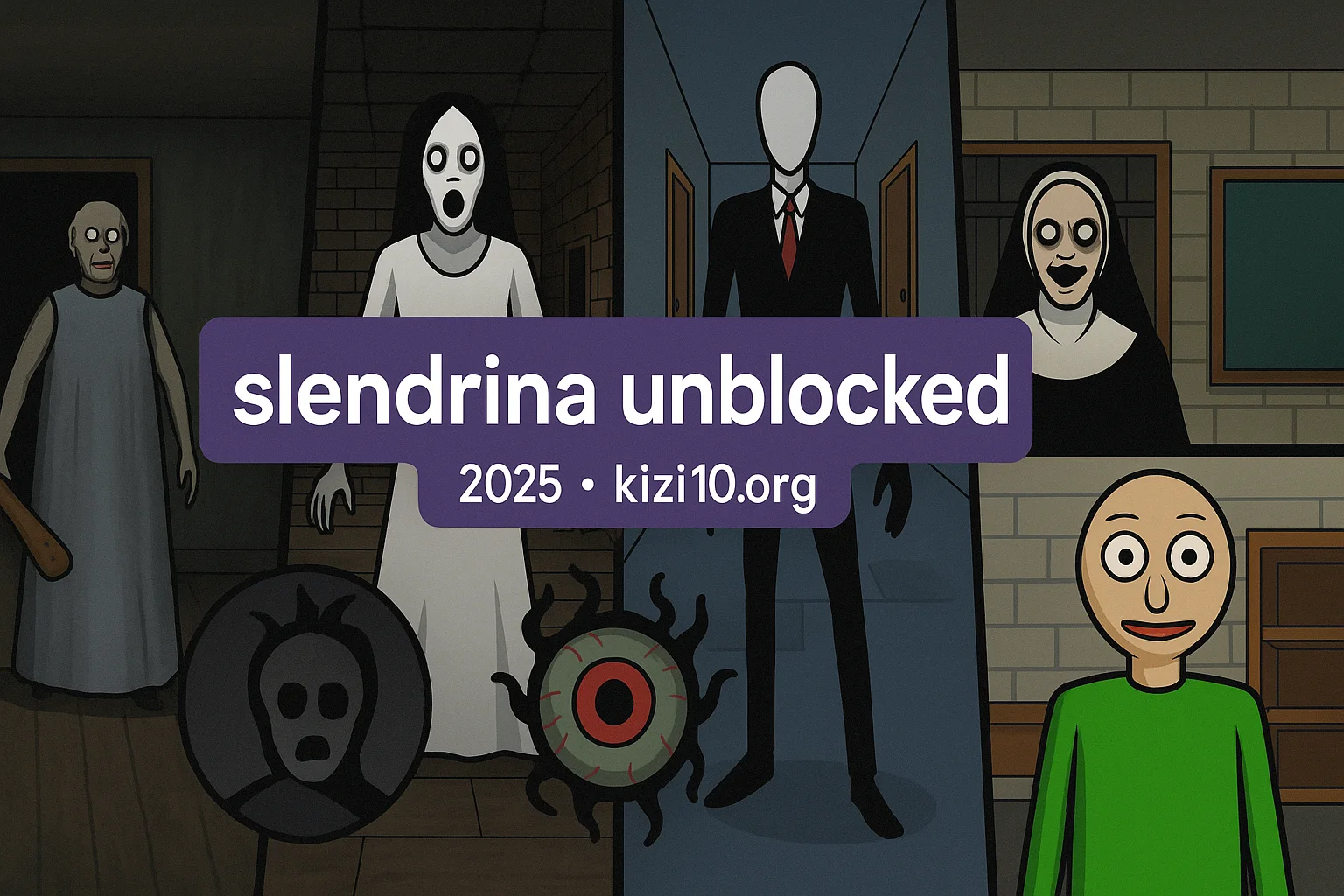
Horror fans throw the phrase around, but here’s the clean definition: slendrina unblocked refers to a browser-first way to play entries from the Slendrina universe with minimal friction, so you can jump straight into a session without installers or gatekeeping networks. The vibe is tight corridors, scarce ammo, and the constant risk of turning a corner into something pale and very mad. That loop sits squarely in the survival horror tradition, where tension comes from limited resources, maze-like maps, and puzzle gating rather than nonstop firepower; if you want a neutral overview of the format that Slendrina riffs on, see the survival horror page.
🗝️ Where to launch without friction
If you want a fast, clean entry point, open this and you’re playing: Slendrina Must Die The Asylum at Kizi10.org. That page routes you into a web-friendly build and keeps the hassle low on standard browsers. If you’re on a modest laptop, enable hardware acceleration, keep tabs light, and don’t stack heavy extensions while you play. The core loop is simple enough to run on everyday machines, but consistent frame pacing makes the scares land harder.
🧭 Universe check: what you’re actually walking into
The Asylum entry many players meet in-browser is a first-person horror shooter from Poison Games that mixes scavenging, key hunts, and outright gunfights. You stalk abandoned wards, collect medical-book pages, and try not to get folded by the title character or her delightful relatives. Official listings and catalog pages describe it as a single-player horror experience with classic “find 8 items” goals, light firearm play, and a couple of sub-areas like a backyard section in some builds.
🧩 What ties Slendrina to bigger indie horror
The Slendrina arc lives adjacent to the wider Granny universe and to the older Slender-inspired boom from early-2010s mobile horror. Fandom docs track crossovers, cameos, and timeline debates, with Slendrina showing up in Granny entries and vice versa. The point for you, the player: expect shared imagery, recurring family members, and collectible-driven pacing across titles. Don’t overthink the canon while a banshee is sprinting at your face.
🧟♀️ Read the enemy room like a pro
Slendrina’s whole bag is pressure via proximity and surprise. Treat every blind corner as a risk event. Angle your approach, quick-peek, then sweep. If you hear the hiss before you see her, break line-of-sight first, then reload. Her mother’s presence in some builds changes the tempo by adding a second threat vector, so commit your mental map of closets, under-stair gaps, and side rooms early. Official store blurbs confirm those two-stalker beats in The Asylum variants.
🔦 Gear and scavenging priorities that actually matter
-
Key items over ammo when your route is cramped. A straight sprint to a locked ward with a guaranteed heal is worth more than topping off magazines.
-
Flashlight discipline. Pulse light for info, then move in darkness to reduce give-away cones in long halls.
-
Sound cues first. Footfalls and whispers telegraph spawn angles. Train yourself to stop moving for one second when a sting plays.
-
Peek math. Shoulder-strafe around doorframes so you can instantly backpedal if you trigger an aggro.
🗺️ The Asylum pattern: how most runs flow
The loop is eight-page or key-collect routing in a hub-and-spoke design. You crack a ward, sweep shelves and side offices, then sprint a safe line back to the hub to reset aggro. Mid-tier arenas layer a backyard or basement to break sightline monotony. If you get greedy and full-clear a wing after a close call, you’ll burn meds and lose time. Clear two rooms, reset, repeat. Store pages and objective beats on your mental minimap so backtracking stays clean.
🚪 Micro-guide: safe rooms and “panic geometry”
Every good horror map hides geometry you can abuse without feeling cheesy.
-
Tight stair turns let you juke and force enemies into single-file.
-
Window gaps with chest-high frames give you shot angles while restricting flanks.
-
Desk clusters in nurse stations create S-curves that burn pursuit speed.
If you can name two panic spots per wing, you’ll live long enough to learn spawns.
🧠 Why the scares land even after you “know the trick”
Procedural variation is tiny but real. Enemy timing shifts a hair, footsteps echo differently in angled halls, and page placement forces new orders. That subtle shuffle keeps fear fresh. Survival horror design theory says you feel less powerful than in action shooters because of scarcity and obstructed interaction; the genre has leaned on that imbalance since the 90s and it still works today.
🧰 Settings and small tweaks that quietly help
-
Sensitivity parity. Match your look sensitivity to whatever shooter you main so your muscle memory carries over.
-
Reticle choice. If the build lets you, pick a simple dot so head-height tracking is effortless.
-
Audio balance. Drop music slightly under effects so stingers and footsteps punch through.
-
Windowed vs full screen. On aging laptops, a smaller window often beats full screen for input latency.
🔐 Play it safe: how to launch slendrina unblocked without sketchy mirrors
Stick to known hosts and avoid any site that demands extra installers or “codecs” for a small browser horror shooter. Legit pages run in the tab. The Kizi10 portal listing for The Asylum is an example of a straightforward, web-ready entry point with no hoops and no side loads. When in doubt, bounce and try again later from a reputable page.
🧭 Strategy snapshots for common chokepoints
The long ward
-
Pre-aim head height, take two steps, stop, listen, then sweep doorframes left to right.
The morgue row -
Clear in Z-patterns so you never cross open middle ground twice.
Backyard loop -
Treat the outer fence as your kiting lane. Reset line-of-sight behind sheds before peeking the central yard.
📸 What to tweak if jump-scares feel cheap instead of tense
Sometimes it’s you, sometimes it’s the settings. If stingers feel like unfair coin flips, raise effects volume, drop master a touch, and cut motion blur. You want readable silhouettes and crisp audio tells. Most important, banish screen glare. Dim the room or tilt the panel; horror built on grayscale shadows is unplayable on a glossy screen reflecting your window.
🧩 For returning fans: the series context in two paragraphs
Slendrina has been iterated a bunch, and community-maintained timelines tie her arc to Granny’s world through cameos and boss roles. If you spot a familiar family member stalking a different hallway, that’s not a random reskin. The fiction overlaps by design, and the easter eggs are half the fun for folks who’ve played multiple entries.
The Asylum’s structure collectibles, key hunts, fast reload loops lands closest to survival horror shooters that sprang from mobile-first design. Poison Games’ own store blurb emphasizes firearms and a backyard add-on in later updates, which aligns with what you’ll feel in the browser build: short, punchy resource runs spiked with sudden lethal chases.
🔁 Practice plan: 20 minutes to get comfortable
-
Five-minute walk with no shots fired, only mapping closets, dead ends, and two safe loops.
-
Five-minute resource run where you grab medkits and ammo only after you’ve identified exit routes.
-
Five-minute pursuit drill baiting an enemy into a loop while you practice quick peeks through adjacent doors.
-
Five-minute objective focus grabbing two pages cleanly, then extracting without hero plays.
🧨 When to sprint, when to crouch
Sprint for relocation, not for exploration. Moving fast into black space turns fair design into a coin toss. Crouch when you’re within two rooms of a suspected spawn or when you’re about to cross a noisy surface. If the build supports cabinets or lockers, use them only as reset valves; hiding too early wastes time that should be spent opening a wing.
📚 Light lore, no spoilers
The asylum setting reads like punishment, and the collectibles hint at why the place deserves its monsters. You will piece together backstory through scattered pages and environmental details instead of cutscenes. That delivery is part of why small-budget horror hits harder than players expect: the gaps let your brain do the scaring. Fandom wikis map the family tree and confirm the crossover DNA, but you don’t need a flowchart to enjoy the chase.
🧷 Minimalist loadout rules that make every fight fair
-
Bring a fast sidearm to cancel panic.
-
Save long reloads for rooms with two exits.
-
Tap fire in long halls so you can listen between shots.
-
If you carry explosives, never clear a room without pre-aiming your escape line.
🛡️ A quick ethics and safety PSA
Horror is better when everyone sleeps fine afterward. Headphones help you focus without blasting speakers at night. If you’re streaming, content-warn for sudden audio spikes. And if a third-party mirror looks shady, do not chase an extra 3 frames per second at the cost of your browser health. Use the clean launch above, play, close tab, done.
🧩 How to think like a designer while you play
Good survival horror uses light, sound, and locked doors to steer you without a waypoint. Start noticing how a broken light and a blood trail nudge you into a wing you forgot. Map designers love S-curves because they control sightlines. They love symmetrical halls because they create panic about what’s behind you. Once you read those tricks, you’ll guess where keys live and where the exit loop probably ends.
🔑 Clean checklist for first-time clears
-
Two safe loops per wing memorized
-
Meds banked before your third page
-
Ammo conservatively spent on threat spikes, not every shadow
-
Door discipline practiced so you don’t back yourself into a closet without an exit
Hit those four and you’ll ship your first clean run fast.
🌘 How to talk about it without spoiling the vibe
People love to retell near-misses. Keep your recaps about your decisions rather than monster placements. “I heard a sting, ducked into records, cut the corner, and lived with one bullet” sells the thrill without spoiling the map. That’s how this style keeps spreading: compact stories with clear stakes.
🔎 Playing smart: when to apply slendrina unblocked specifically
Use slendrina unblocked when you need a quick scare session that respects your time and your laptop. It’s ideal for short breaks, teaching a friend the survival horror basics, or testing your nerve without a 20 GB install. You still get genuine tension, real routing problems, and that delicious relief when the final door clicks.
🧩 FAQ about slendrina unblocked
Q1. What is slendrina unblocked in plain language
A browser-friendly way to access Slendrina entries, especially The Asylum variants, with instant play and no installers, tuned for short, tense sessions.
Q2. Is it actually survival horror or just a shooter
Survival horror at the core. Resources are limited, vision is controlled, routes are puzzle-like, and the gun is a tool not a superpower. The genre definition aligns with that balance.
Q3. Who made the Asylum variant I keep seeing
Catalogs list Poison Games as developer and publisher for Slendrina Must Die The Asylum, with first-person, single-player tags.
Q4. Does the browser version include the backyard area
Some official store blurbs mention a backyard add-on in later updates. Expect core asylum halls first, then offshoot spaces depending on build.
Q5. Is there any link to Granny or is that fan theory
Community-maintained wikis document explicit crossovers and appearances across both series. It is a real connection, not just a rumor.
Q6. Best settings for weak laptops
Hardware acceleration on, windowed if full-screen stutters, effects volume above music for better audio tells, and fewer background tabs.
Q7. Where should I click to play now
Use the single clean portal listed above to jump straight into the asylum run and focus on routing rather than downloads.
🏁 Final word
If you want tight tension with zero-install convenience, slendrina unblocked is the move. Learn two safe loops per wing, let audio cues guide your peeks, and treat ammo like a lifeline rather than a crutch. The scares hit harder when you play with discipline. Fire it up, count your pages, and close that final door with a grin.
Discover countless thrills beyond Slendrina Unblocked, and explore the best browser games at Kizi10 Games.